

A reminder for the tRumpers in the back…

It looks like there’s going to be a snowstorm in these parts starting Saturday night and going into Sunday morning. It’s hard to tell how many inches it will be, or if it will be a “wintry mix”. Before Covid and the beginning of “Zoom worship” as a thing, you’d wait until Sunday morning to see what actually happened. But now, with the possibility of Zoom worship, you want to make the call during the day Saturday so that the worship leaders can make the shifts they need to to have worship online-only. So the lay leaders and I will make the call tomorrow (Saturday) morning based on weather forecasts rather than the actual weather reality of Sunday.
The problem is, I find that weather forecasts try to make the storm sound as exciting as possible — like a snowmageddon or snowpocalypse is upon us. It’s better for ratings. So it’s hard not to be skeptical.
My gut feeling is that it won’t be that much snow, but the timing is terrible. We shall see.
It just occurred to me that DJT is the ultimate energy vampire. How to fight fascism without draining all of one’s lifeforce, that is an important question.
I stumbled upon this video from Oprah Winfrey. I have complex and mixed feelings about Oprah, but she makes a lot of interesting points which I am pondering.
One thing I know for sure is that the only way I will make it through these next years and hold on to my sanity and life is to find balance. And so, I will ponder this further.
I will say that I had hoped to keep whatever connections I could to those who support DJT. But now, I’m feeling that it is dangerous to remain in relationship with those who enable fascists. I am rethinking many things. This isn’t the time to be wishy washy.
Good morning and greetings from the post inaugural dystopian hellscape! How are you resisting today? I’m going to learn more about rights in dealing with ICE today. We have to stand up for our immigrant and refugee siblings. Here’s one useful link, if you’d like to resist ICE: How US Citizens Can Protect The Immigrant Community from the Deportation Force. What are you up to today?
And now for something completely different…

In an effort to stay sane, I’m going to try to post “fun stuff” along with the resistance, because joy is indeed an act of resistance (thank you, Audre Lorde).
I’m a huge Beatles fan. I love all The Beatles albums, and everything including and after Rubber Soul is indeed a masterpiece. I have always been a bit thrown, though, by the so-called “White Album”. It’s the only double album by The Beatles, and it’s very uneven. I’ve always thought that if they’d used their usual discretion as to what was “worthy” and made it a single album, it would be among their very best.
I took the liberty of creating my own version of “The White Album” as a single album, and created a “Beatles Novelties” with the leftovers. Here is what those two albums look like:
(Lara’s cut) “White Album”
Side A:
Back in the USSR
Dear Prudence
Ob-La-Di, Ob-La-Da
While My Guitar Gently Weeps
Happiness Is a Warm Gun
I’m So Tired
Savoy Truffle
Blackbird
Side B:
Revolution 1
Why Don’t We Do It in the Road
I Will
Birthday
Mother Nature’s Son
Sexy Sadie
Helter Skelter
Julia
Tell me that’s not an amazing album!?!? If you have Amazon/Prime Music, you can listen to this version here.
This is what the other album would look like:
(Lara’s cut) Beatles White Album Novelties
Side A:
The Continuing Story of Bungalow Bill
Wild Honey Pie
Honey Pie
Glass Onion
Piggies
Yer Blues
Martha My Dear
Side B:
Rocky Raccoon
Don’t Pass Me By
Everybody’s Got Something to Hide
Long Long Long
Cry Baby Cry
(Bonus) You Know My Name (Look Up My Number)
Good Night
Revolution 9
If you have Amazon/Prime Music, you can listen to this version here. What would your version of these two albums look like?
Wow, I really left my five readers hanging after that last post!! Here’s my sermon describing my trip:
Okay, now we’re caught up. Okay, not really. But if you want to see any of the services I’ve led in recent times, you can always find them at this link.
Horrifically, the United States elected a fascist in November, and here in January it’s already getting scary. I will not mince words, not in the face of fascism. I hope I will be here more often, calling it what it is. And sometimes making posts that are about completely unrelated things, just to keep sane. Because we have to embrace joy as an act of resistance in these times.
I arrived in Accra, Ghana on February 6th. I was very kindly picked up at the airport and hosted for the night by Vida and family, friends of the Macdellar School: http://macdellar.org.

Vida and family took me to Madina the next day to ride a tro-tro to Kpando. It was an adventure all by itself! I rented a seat for myself and for all my luggage and took the 4 hour journey with friendly strangers.
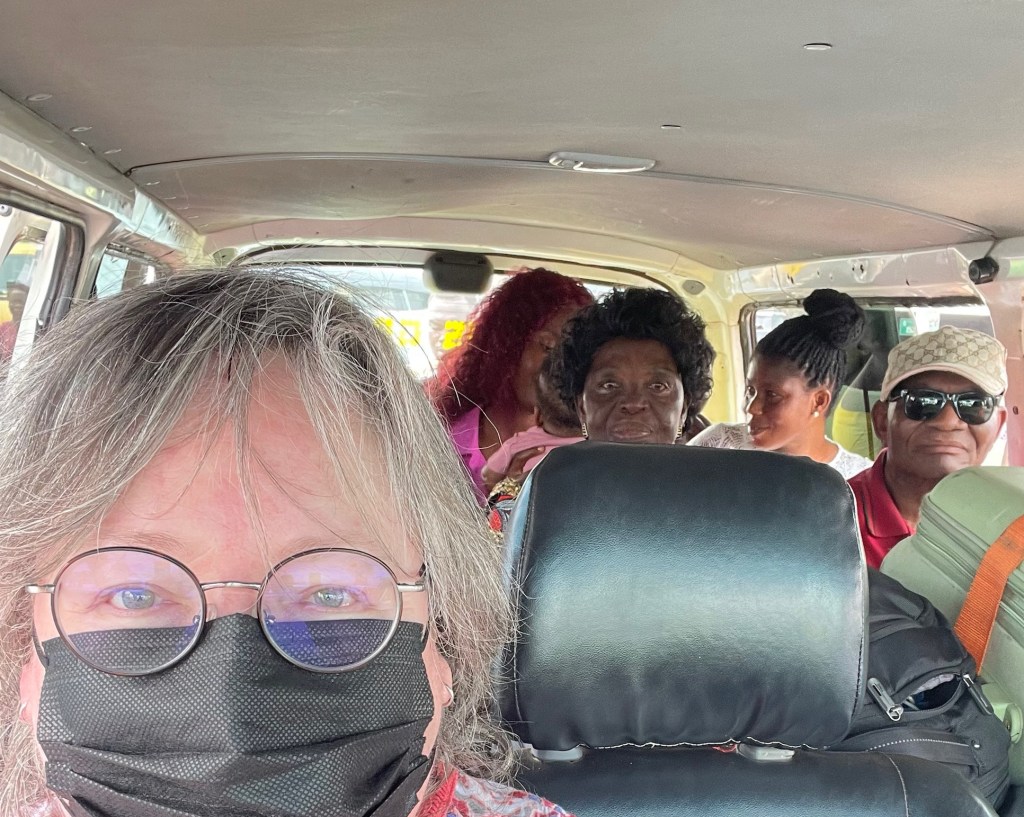
I finally arrived in Kpando and finally got to meet Mark Tillah, director of the Macdellar School. We were so happy to see each other!
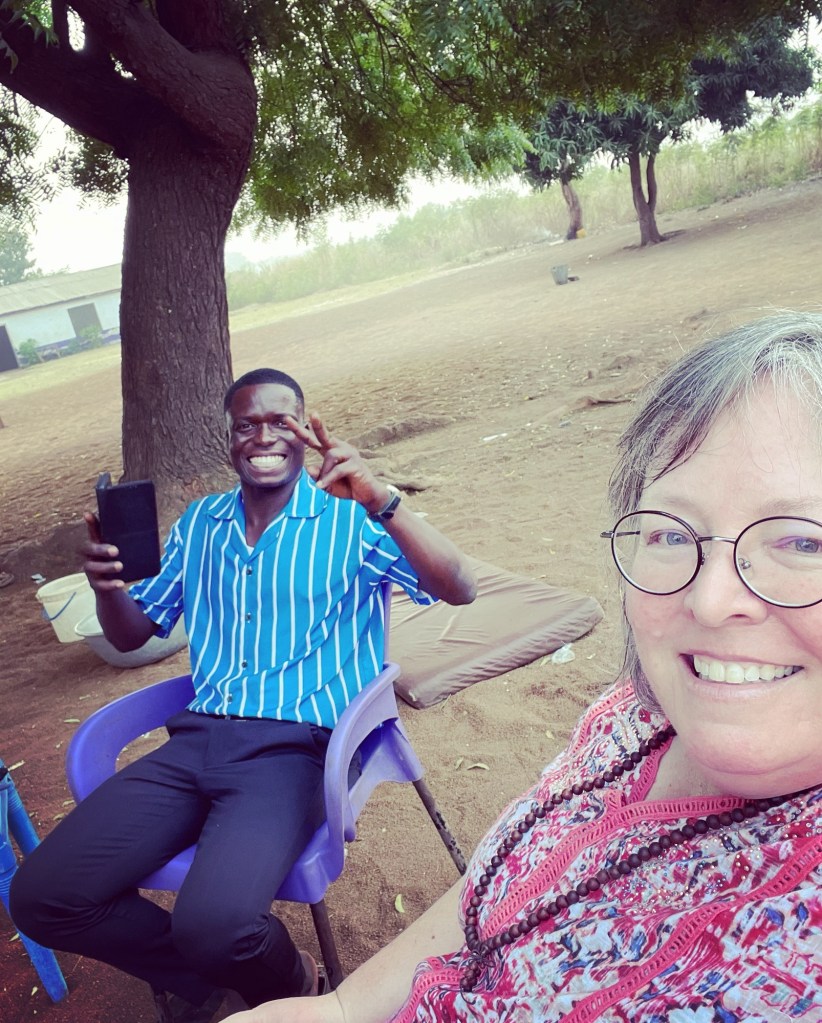
This morning, after my first night, I am observing classes and typing this post from my cell phone. The students are wonderful!
More tomorrow!
Today is a loooong travel day. I had a 6:30 pm flight out of Logan in Boston… now I’m in JFK in NYC waiting for an 11:55 pm flight to Accra, Ghana. Long layover — but I don’t mind.
I love airports. It’s some of the best people-watching you can do. People are often on the journey of a lifetime… or there’s a big reunion after many years… or it’s a business traveler who has flown 1,000,000 miles and is over it.
I usually treat myself to a decent meal if I have a long layover. It takes the edge off of a long travel day.

I’m very excited! I’m a little nervous, but in a good way. I’m looking forward to the adventure! See you soon — from Ghana!
Finally, we come at last to Kubrick’s final film, and the one that started this whole blog series: Eyes Wide Shut (1999). I think this movie is a misunderstood masterpiece.

This is just the second of Kubrick’s films that I saw in the theater upon its release. It’s another long (2 1/2 hour) film.
I think one of the reasons that some folks aren’t crazy about this film is that it feels a bit plodding at times. Personally, I think that adds to the tension and the trance-like effect of the movie.
Some people don’t like the movie because they were disappointed that there really isn’t much sex; the previews and early descriptions talked about orgy scenes and sex galore. But that’s very misleading. There is an orgy scene, but it isn’t sexy at all. And in fact, for ratings reasons, some of the sex was partially hidden by characters in the foreground (I think that enhances that scene really, adding more mystery and room for imagination).
Sometimes the movie is described as being about marriage and long term relationships and secrets. Nah, I don’t think that’s really the point. It’s a psychological thriller of sorts, and I think it’s about what’s hidden in plain sight (thus the title “Eyes Wide Shut”, whereas it comes from Traumnovelle (meaning “Dream Story”) a short German novella from 1926 (by Arthur Schnitzler) and 1969 made-for-TV film that you can watch for free here. Kubrick made lots of interesting changes from the source material (I’ve read the novella as well as watched the made-for-TV movie). The main character (Dr. Bill, played by Tom Cruise in 1999) is ostensibly Christian (or from a vaguely WASPy culture) as the Kubrick film is set during Christmas season (as you can see from the decorations etc.). In the novella, the doctor is Jewish. That’s a significant change, and it seems quite deliberate and an interesting choice from Kubrick (who was culturally Jewish).
The movie adds a scene very early on that isn’t in the novella — the party of the rich people, the one that’s public (not the masked scene, which comes later)… the party that Tom Cruise and Nicole Kidman’s characters go to together. That party scene is in obvious contrast to the famous masked party with the orgies that comes later. In a sense, the first party is the “plain sight” version of the hidden masked party. But it’s all the same uber-rich people, and in fact we later learn that some of the same folks were at both parties (as is Dr. Bill/Tom Cruise). And lots of the same illicit stuff is happening at the first party, just behind closed doors (not on display as at the masked party).
I love this film for its eerie nature. The simple notes on the piano throughout the film are menacing. I love the psychological struggle of Dr. Bill. I think Nicole Kidman’s character is really interesting and I’m surprised that I don’t see more written about that character. To me, that character is really cold and borderline cruel in some ways. This isn’t to excuse Dr. Bill’s misadventures, which are a wildly inappropriate over-reaction to things she shares.
Actually, almost every single character in the film is mysterious and creepy to me. Maybe that’s to put me into Dr. Bill’s mindset and experience. (Dr. Bill isn’t creepy and mysterious in the same way because you’re basically experiencing the story from his point of view.)
In Traumnovelle, the source material, there’s the “it was all a dream” thing, as the name suggests. In Eyes Wide Shut, it’s all real — a little too real! It feels like Kubrick wanted to take the story a bit beyond Schnitzler’s Freudian tale and into the realm of cultural critique of the super rich (Illuminati? whatever).
There’s so much in this film… I’ve seen it many times, and notice multiple new details and nuances every time. It’s deep and rich. It makes me think every time.
So… what are my favorite Kubrick films? It’s so hard to rate them. It’s fascinating that he took so much time between films, especially toward the end. And other than the anti-war theme that came up several times, they’re all wildly different from each other. I will say may top five Kubrick films are:
Before I share some thoughts on Kubrick’s penultimate film, I want to share something from my sabbatical.
My awesome congregation (First Church Unitarian, Littleton) gave me a box of surprises to open on the first day of each month of my sabbatical (with a “rabbit, rabbit” theme). I opened the first one two days ago. It was so fun, and so sweet! Here are a couple of photos:


Isn’t that the best? I’m already looking forward to the March 1 box.
————
But now, for some of my thoughts on Full Metal Jacket (1987). When I just now rewatched FMJ, it was actually the first time I’d seen it since it was released in theaters. The first time, I saw it with my mom, and it was the summer after my first year of college — and my first year of NROTC. Having recently gone through my own version of something “Boot Camp”-ish (or “Plebe Summer”-ish), the first part of the movie, showing the Marines training at Parris Island, left quite an impression on me.

It is a very striking depiction of military training, maybe the best ever done in a movie (though An Officer and a Gentleman definitely offers a good take too, in a more officer-training-like way). Watching it now, in 2024, it made me cry. It wasn’t even the tragic ending of this part of the film that made me sad. Really, it was what led up to it — the way military training makes you feel like you’re a turd; the way it breaks you down; the way it uses scapegoating and cruelty for motivation. It’s sick, really. I’ll always think it’s sick. And I’ll always appreciate that FMJ brings out the sickness of it better than anything else I’ve seen.
The second part of the film is completely different. It pictures many of the same characters from the Parris Island part, but adds new characters and depicts the Vietnam War itself (in 1968 at the time of Tet). For some people, this feels disjointed. Apparently it was one of Kubrick’s ambitions to really change up and be creative with narrative structure. I like it, personally, and as a veteran I can say that there’s military training, and then there’s active duty after that, and they really are like two different worlds (even if you never go into combat). I think FMJ captures that really well. Full Metal Jacket also gives a dramatic, shocking, unforgettable ending to each of the two parts.
In terms of film craft, I was less aware of it as I was watching. With most of Kubrick’s films, it’s hard not to notice the film craft in real time. It was more subtle in FMJ, at least for me. That’s not necessarily a bad thing. It just felt less Kubrick-y in that way.
Everyone always raves about Apocalypse Now and Platoon, and they are excellent Vietnam War movies. But for me, The Deer Hunter and Full Metal Jacket are even better. In TDH and FMJ, I think you get more character development. The characters are humanized more in my opinion, and they are more sensitive (at least the main characters). All of these films bring out the absurdity and horror of war. I think with TDH and FMJ, you get more of a sense of the “before and after” of the main characters. I really appreciate that aspect. I also think that The Deer Hunter and Full Metal Jacket do the best job of bringing out the “duality of man” (as Private Joker, Matthew Modine’s character, says) and the stupidity and toxicity of our culture of violence and patriarchy.
Kubrick made just 13 feature films. Of those 13, four (Fear and Desire, Paths of Glory, Dr. Strangelove, and Full Metal Jacket) were full-on anti-war films. (And two others, Barry Lyndon and Spartacus, include war scenes are certainly don’t make fighting look good either.) For me, Kubrick is one of the best anti-war filmmakers in history, maybe even the very best. Respect.
Recently I was visiting family in Pennsylvania. I forced my poor mama to watch The Shining (1980) for the very first time! She didn’t exactly enjoy it per se, but she’s glad she saw it.
This was just the second time I’d ever watched it. The first time was in high school. Some of my friends were really into horror movies, which were pretty big back in the 80s anyway. I never really liked horror movies, but I went along with it so as not to be a killjoy. By the time I saw The Shining I had already suffered through tons of slasher films, including Friday the 13th and The Evil Dead and all kinds of trash. When my friend put The Shining VHS tape in, I was pretty skeptical. But I actually thought it was good. I didn’t really find it scary, but I never found horror movies to be very scary. I thought most of them were gross and stupid; by contrast, The Shining was pretty interesting.
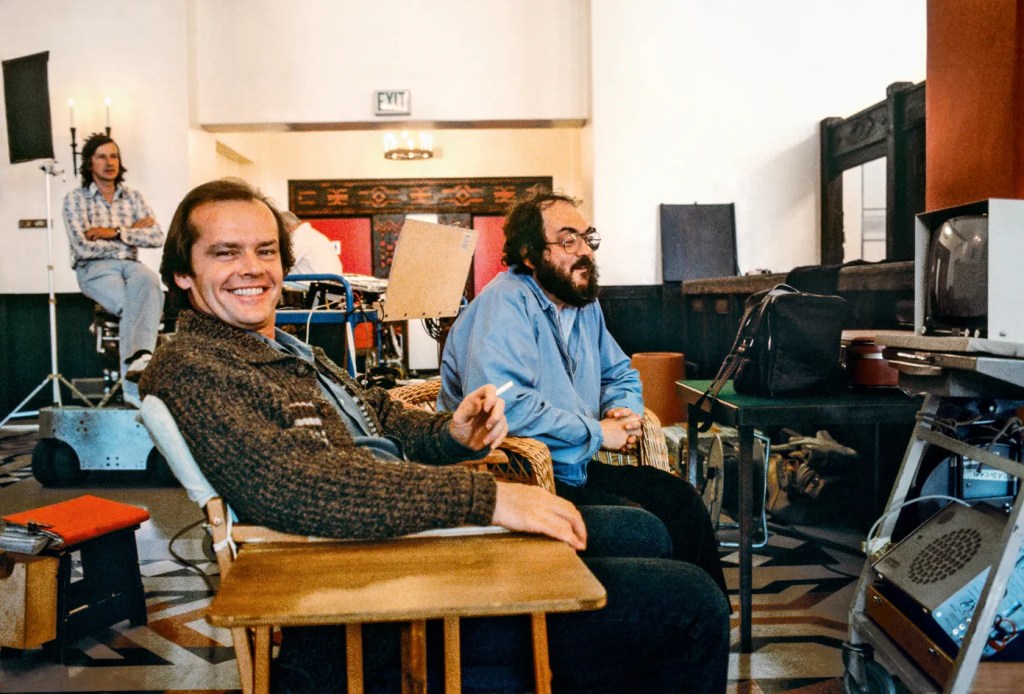
Watching it about 40 years later, I agree with my teenage-self. It’s a good flick. I’ll never understand why Stanley Kubrick chose to make this particular movie. I’m very curious; it seems like an odd choice for him. Maybe he wanted to prove that even pulp fiction/horror could turn into a movie with artistic merit? If so, Well done.
Much has been written about the film craft on this one, so I won’t go into it much. I liked the way the camera sort of walked around with the characters a lot of the time.
The music was perfect and added a lot, as is so often the case with Kubrick films. And it has that sudden “big finish” that he often uses too.
It’s another 2-and-a-half-hour film, which is pretty typical for Kubrick. I’d have to say I can’t imagine making a better movie out of King’s book. How much of that is Kubrick, and how much Jack Nicholson? Hard to say.
 Fool of Spirit